A once in a lifetime invitation to exhibit at the world renowned Victoria and Albert Museum, South Kensington, London.
Museum of Small Things 28th April - 2nd May 2026 Europe Galleries
ECHOES IN BLUE
These vase forms, inspired by seventeenth-century Delft flower pyramids, reimagine Delftware through cyanotype on fabric. English willow silhouettes are fixed in blue using sunlight, echoing cobalt glaze transformed by the elemental power of the kiln. Referencing global trade, science, and women’s enterprise, the work gathers history into a quiet, lasting resonance.
These contemporary textile pieces take the form of a pair of fabric vase slips, a form I have been working in for a number of years now - making 3 dimensional artworks with a purpose. Their shape is inspired by the playful flower pyramids and decorative vessels made in seventeenth-century Delft; objects created to impress as much as to be useful. Like those historic pieces, these vases combine references from different places and times.
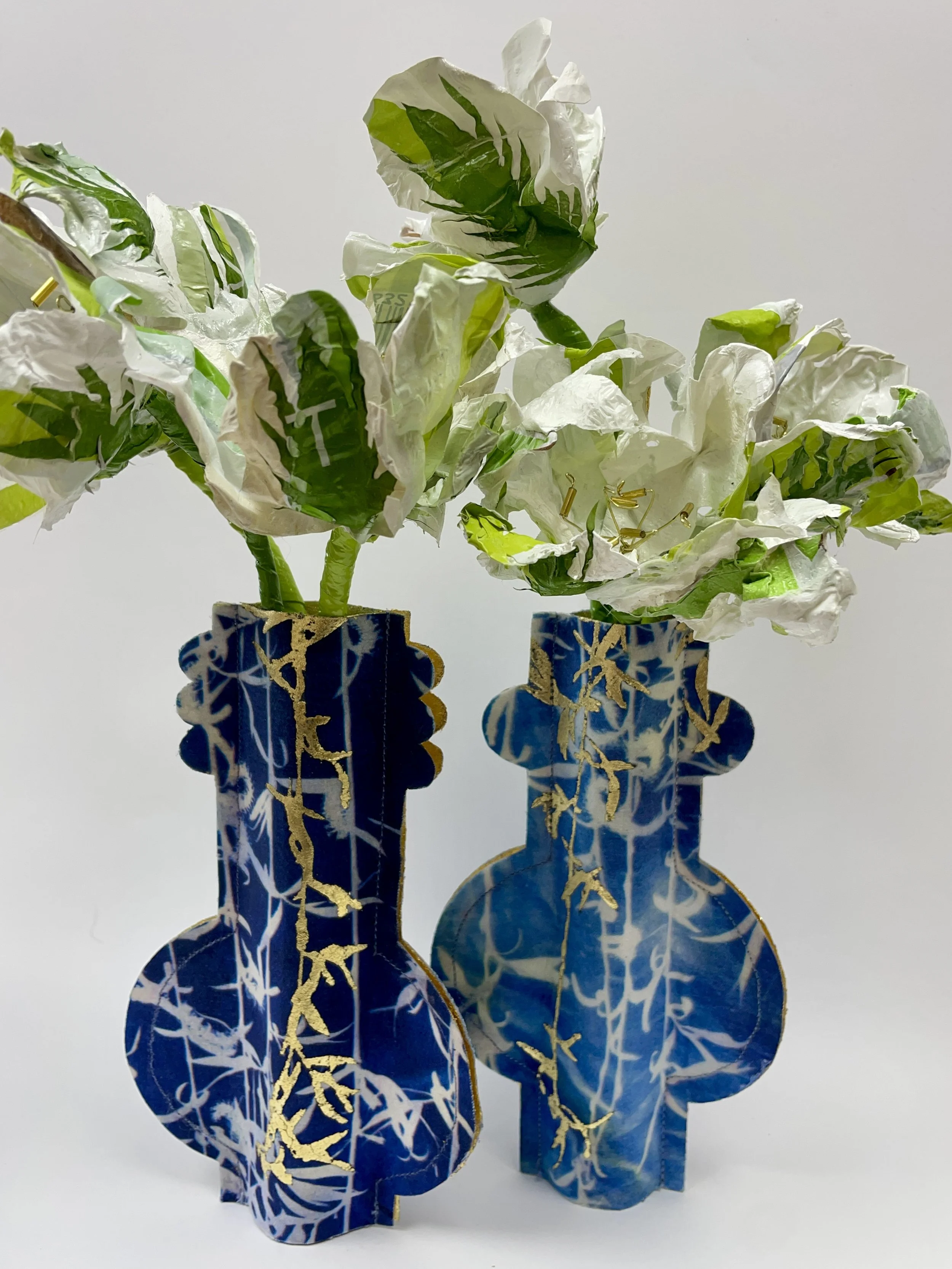
Echoes in Blue - a pair of willow pattern vases
The vases are made using English willow silhouettes and the cyanotype process, which uses sunlight and iron salts to create deep Prussian blue imagery. Like Delftware, it is a process that depends on elemental power to make its colour. Where Delft potters used kiln-fired cobalt and tin glazes to produce bright blue-and-white ceramics, cyanotype uses the power of the sun. In both, blue comes through a process of transformation.
Delftware was developed during the Dutch Golden Age, when Dutch traders brought Chinese porcelain into Europe through the Dutch East India Company. The blue-and-white style was already a kind of echo, a European response to Asian ceramics that had travelled across oceans. It carried with it stories of trade, ambition, and imbalance of power.
This work carries those echoes forward.
Delft blue appears again here in fabric.
Hard ceramic becomes soft cloth.
Kiln fire becomes sunlight.
Motifs originating from Chinese culture become English willow fronds.
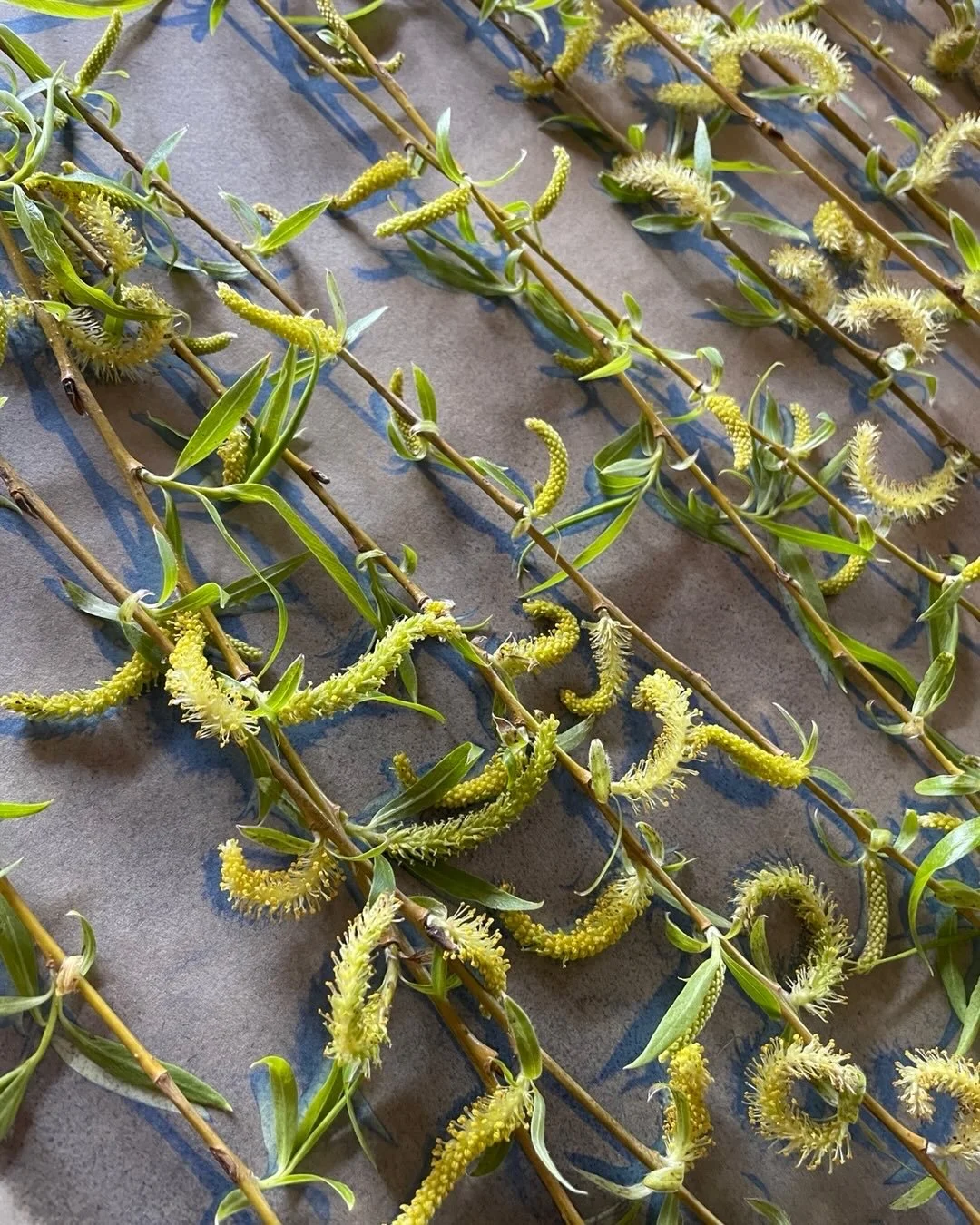
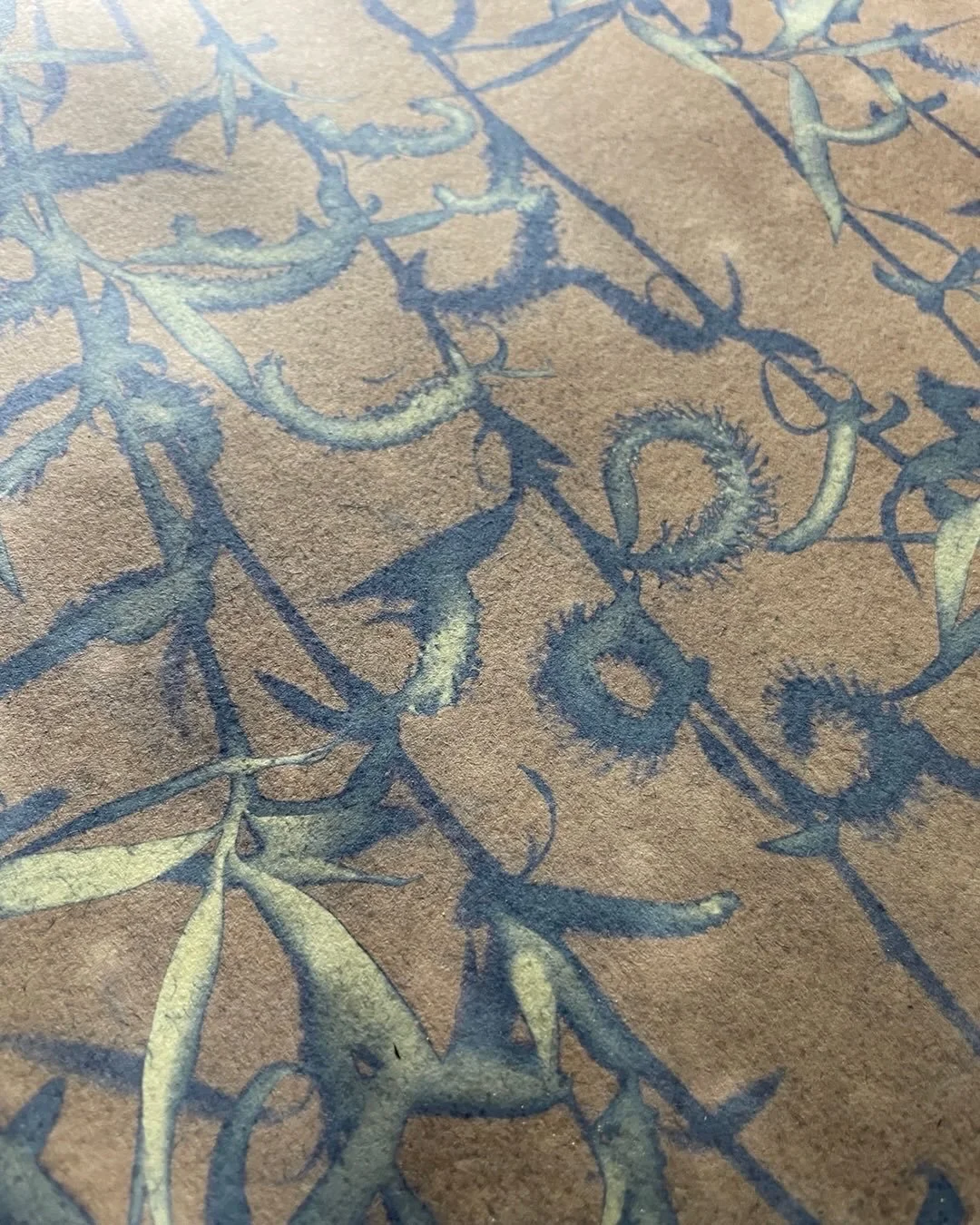
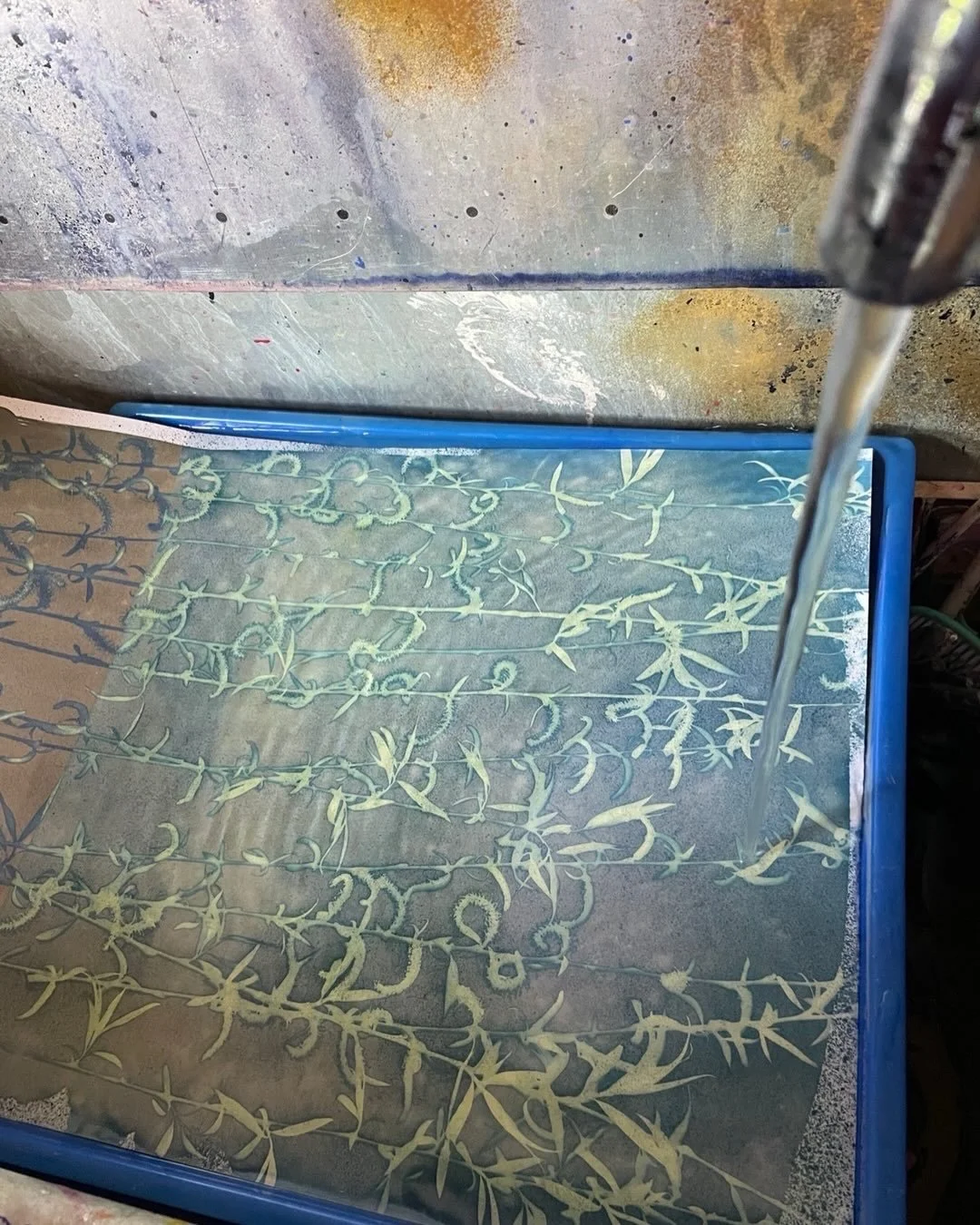
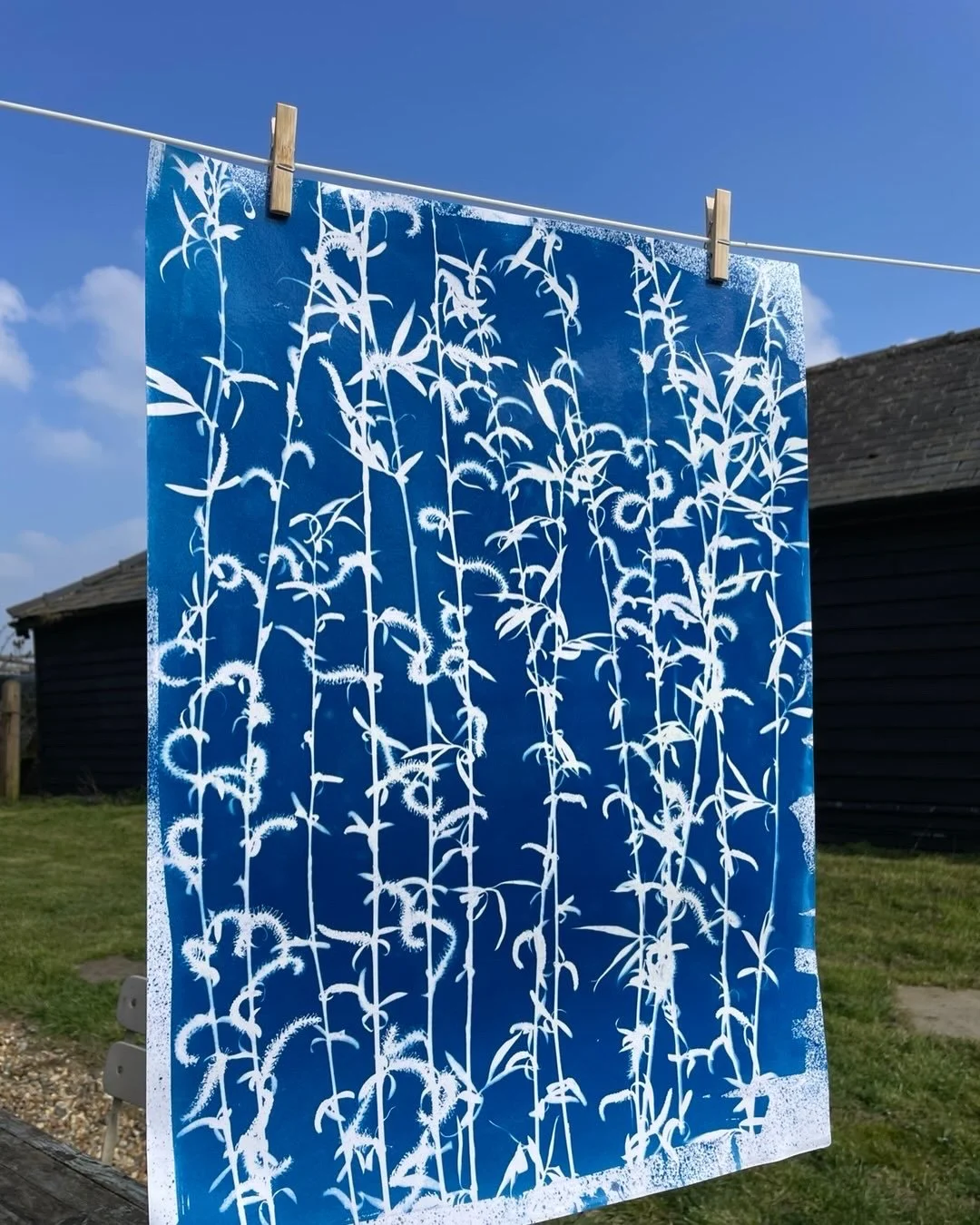
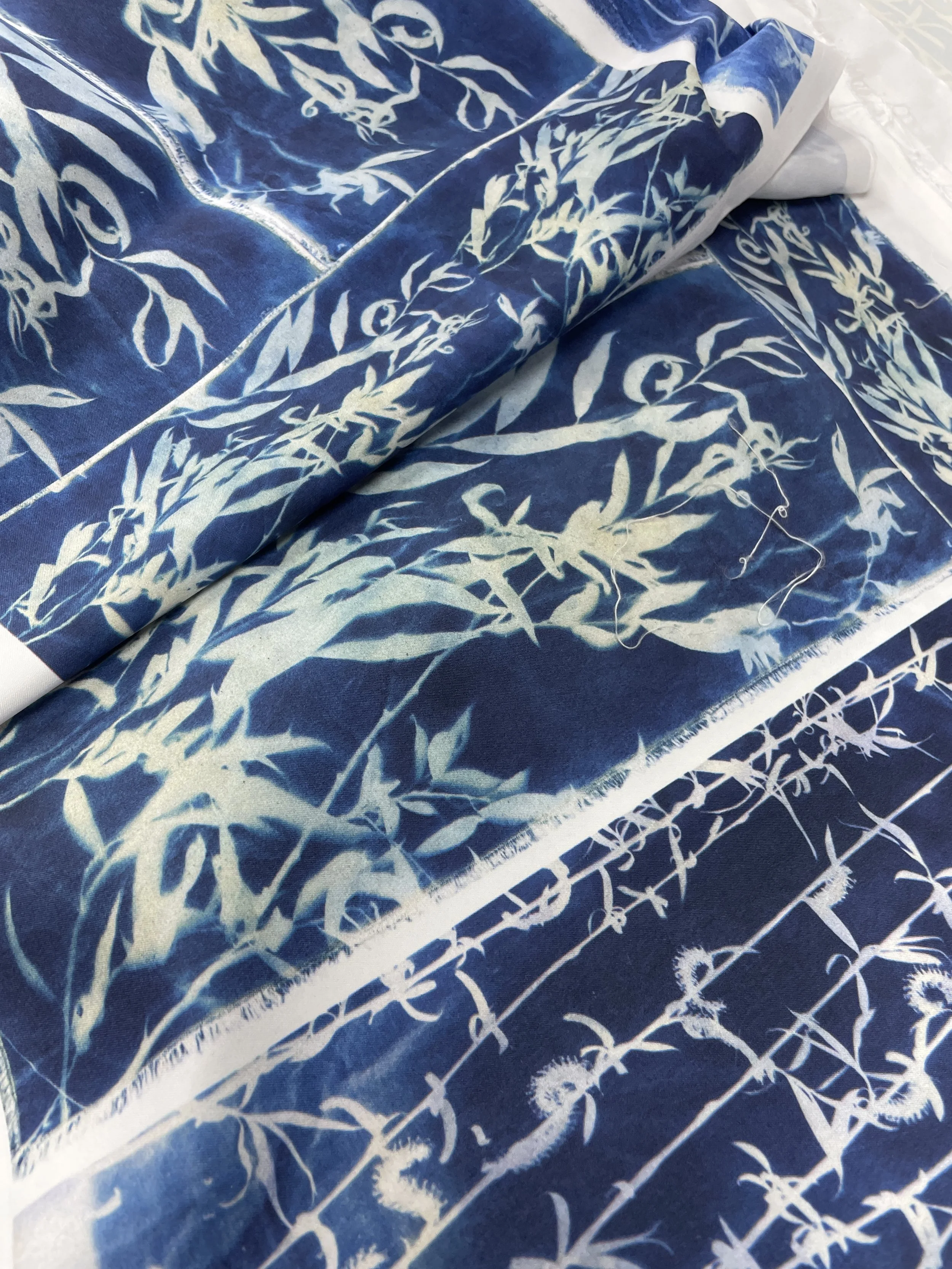
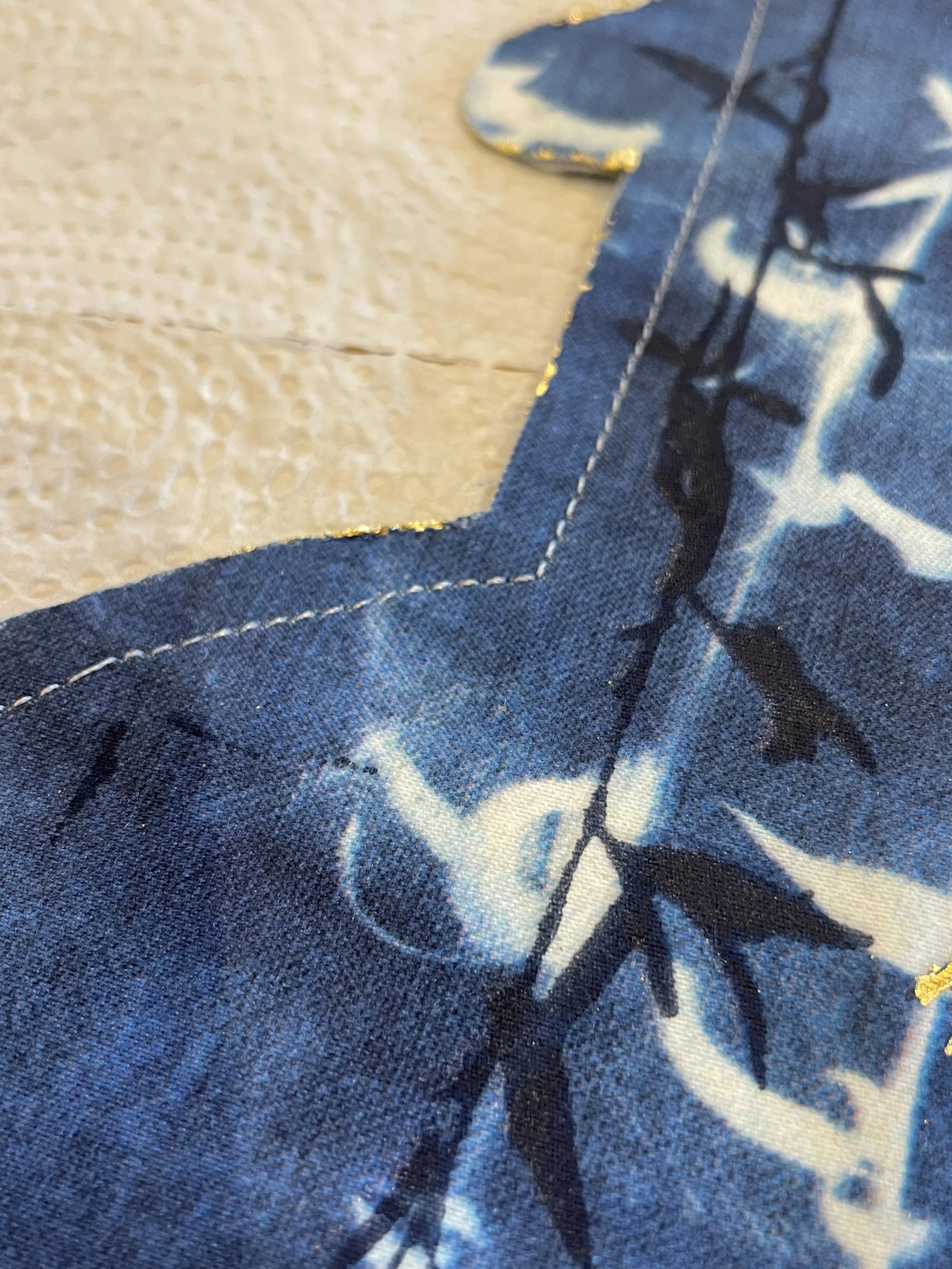
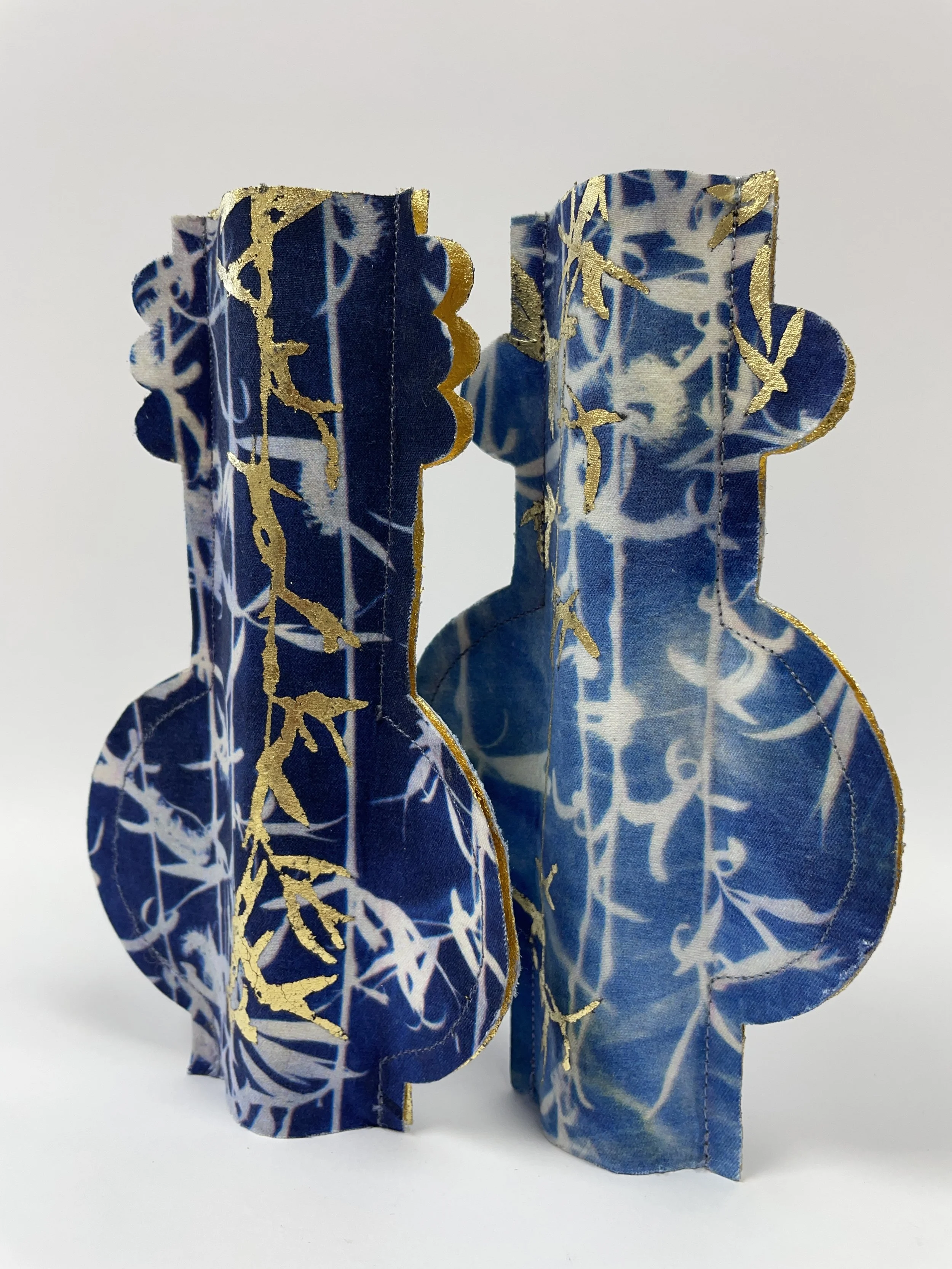
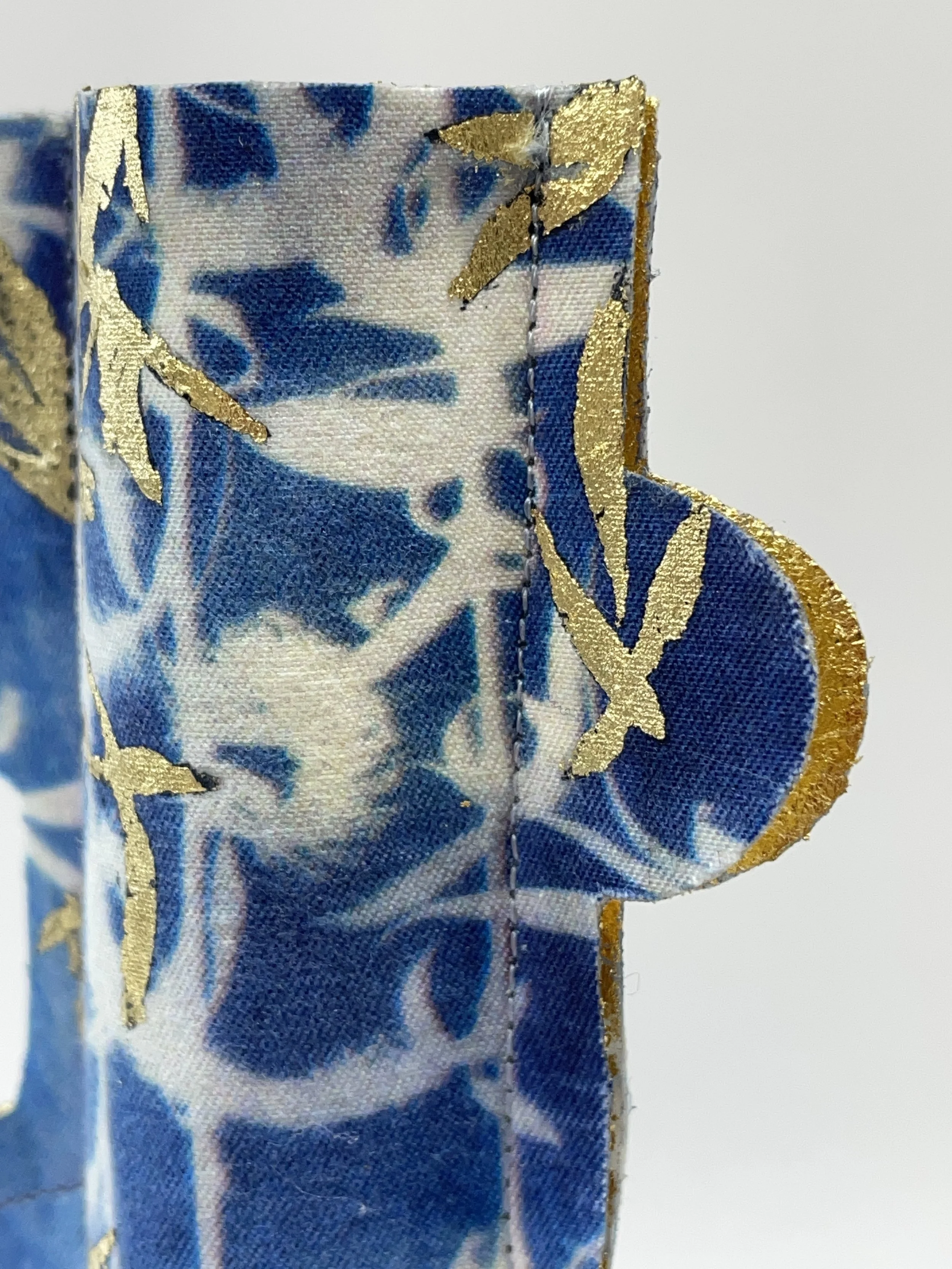
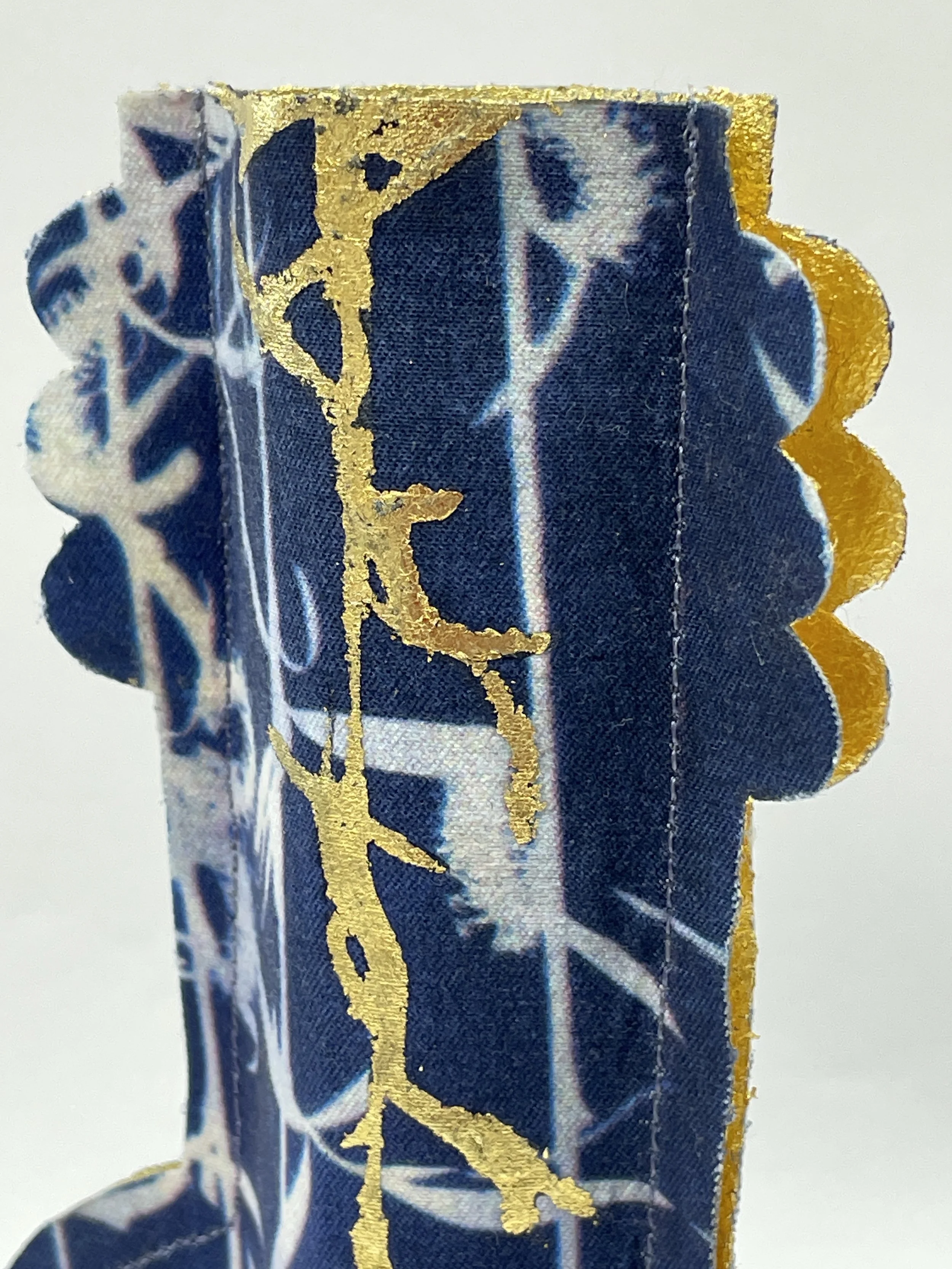
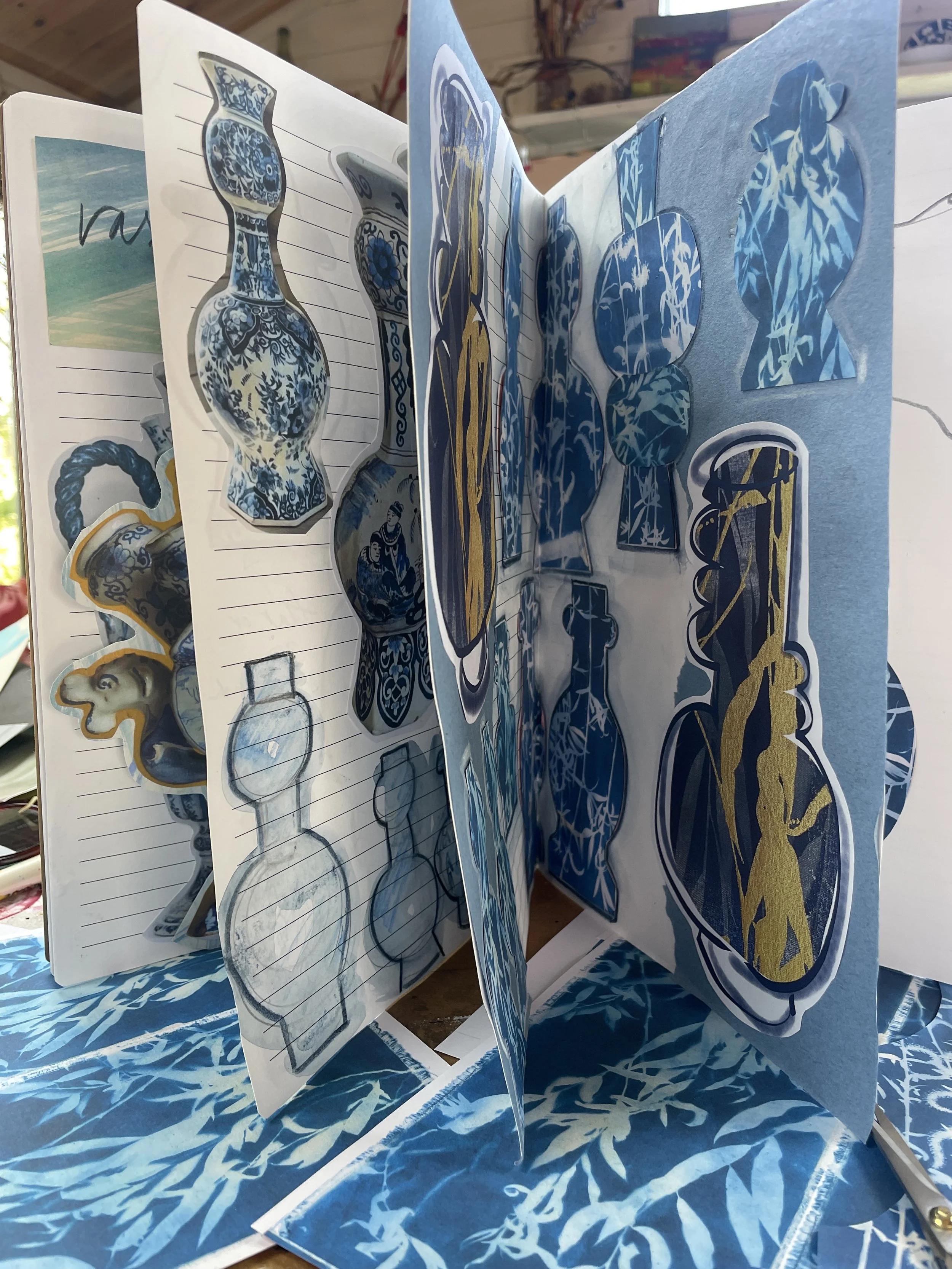
Instead of painted decoration, willow leaves and branches are placed directly onto the cloth. The shapes are made by blocking the light, leaving behind white silhouettes. The process is simple, connected to the nature it captures: plant, fabric, sun.
The exhibition theme ‘Echoes’ also connects to the people behind Delftware. Around twenty percent of Delft potteries were owned by women. In the seventeenth-century Dutch Republic, women could inherit businesses, manage workshops, and work with a degree of financial independence. Even so, their role in these larger histories is often less visible. Cyanotype feels suited to this idea because the image appears through traces and silhouettes - marks of something that was there.
Both Delftware and cyanotype rely on chemistry, experimentation, and practical knowledge. Both sit somewhere between art and science, turning raw materials into blue through natural forces.
In these textiles, blue becomes a link between past and present. It joins porcelain to fabric, trade routes to English willow, kiln heat to sunlight, and forgotten histories to contemporary making. The work does not copy Delftware, but it listens to it. It carries forward its colour, its processes, and its hidden stories softly, a distinct but quiet echo.
Whilst making this work, listening to the Curious Objects podcast and discovering Genevieve Wheeler Brown’s book Beyond Blue and White were key moments in its evolution.
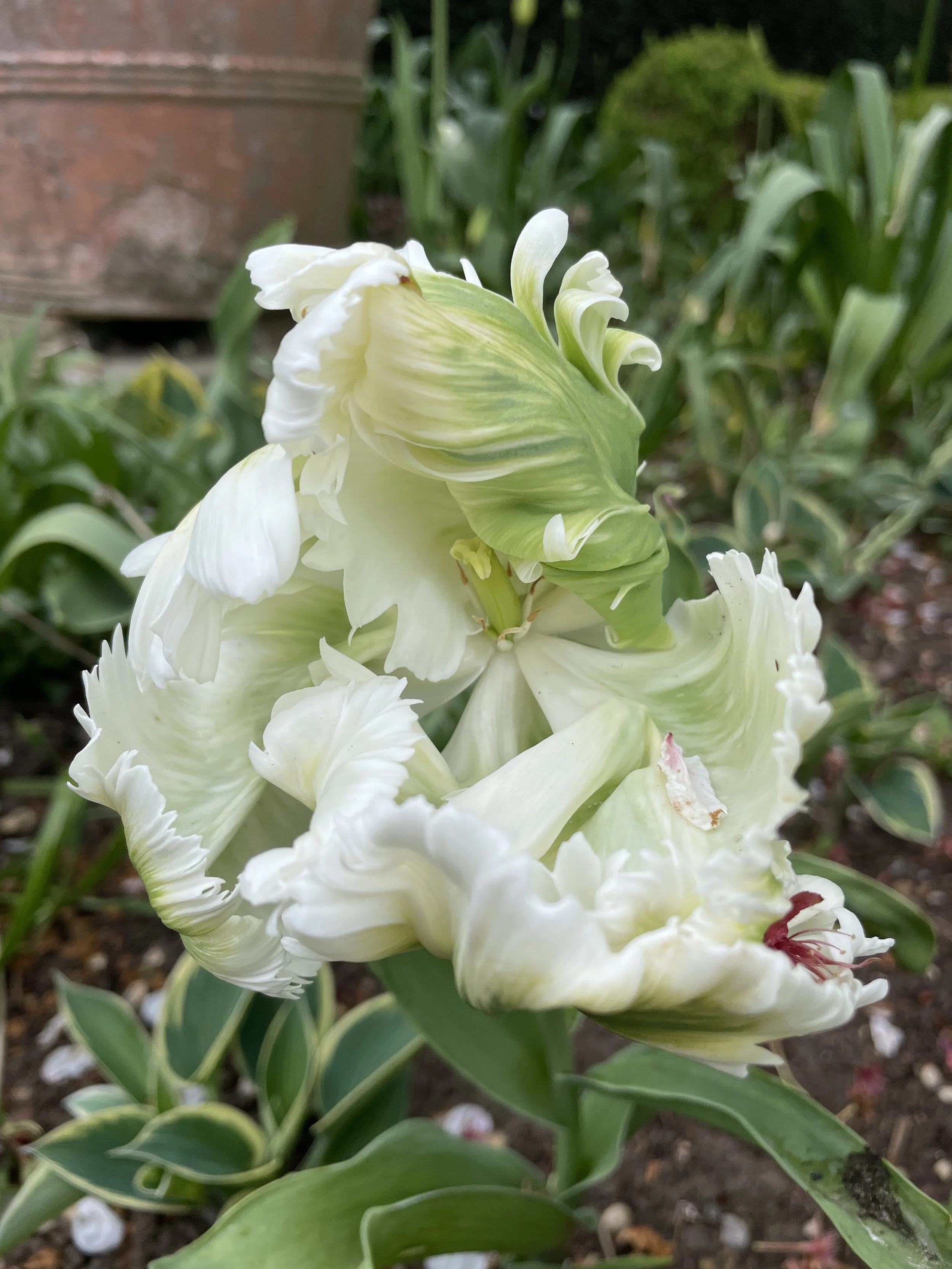
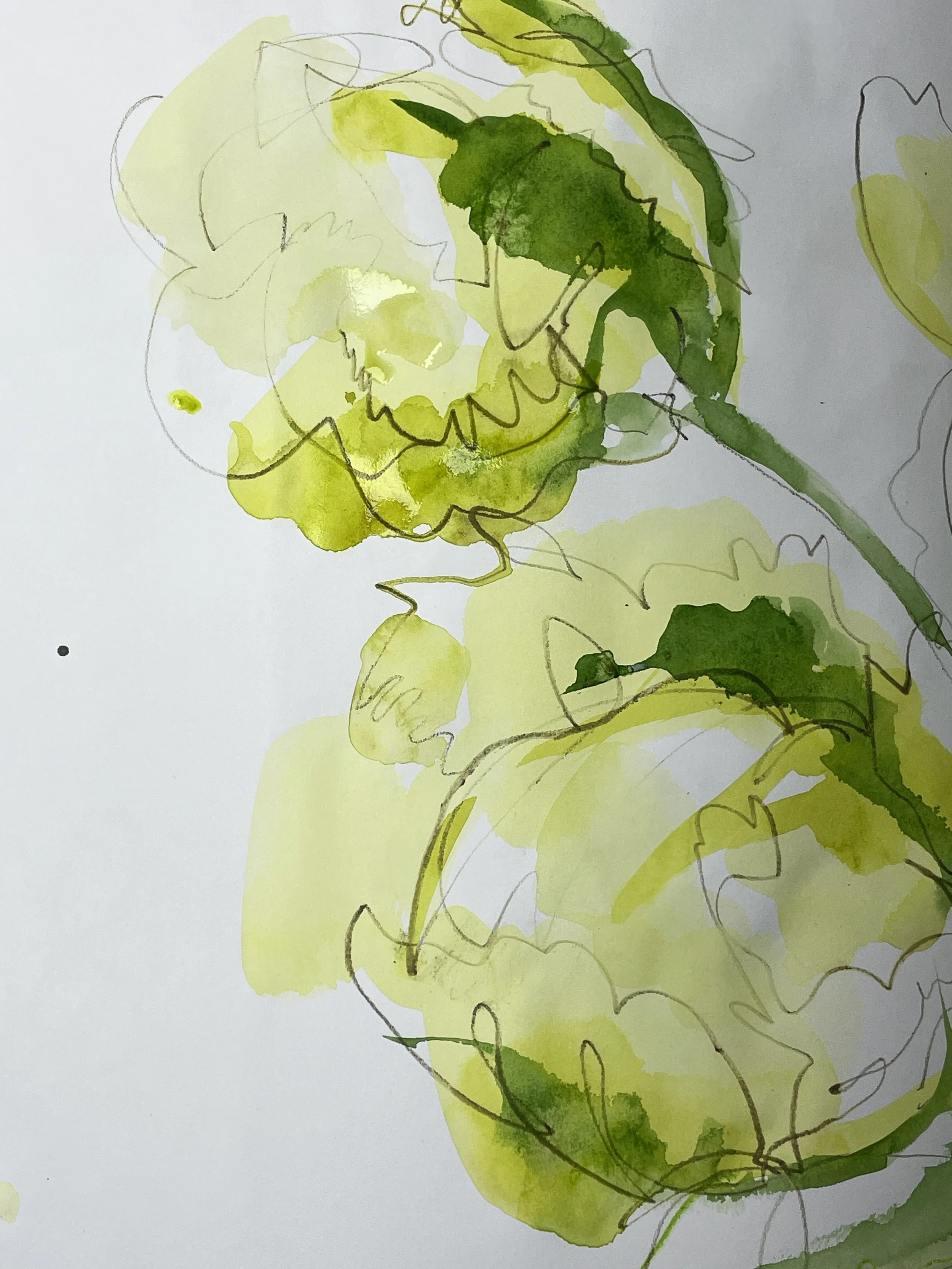
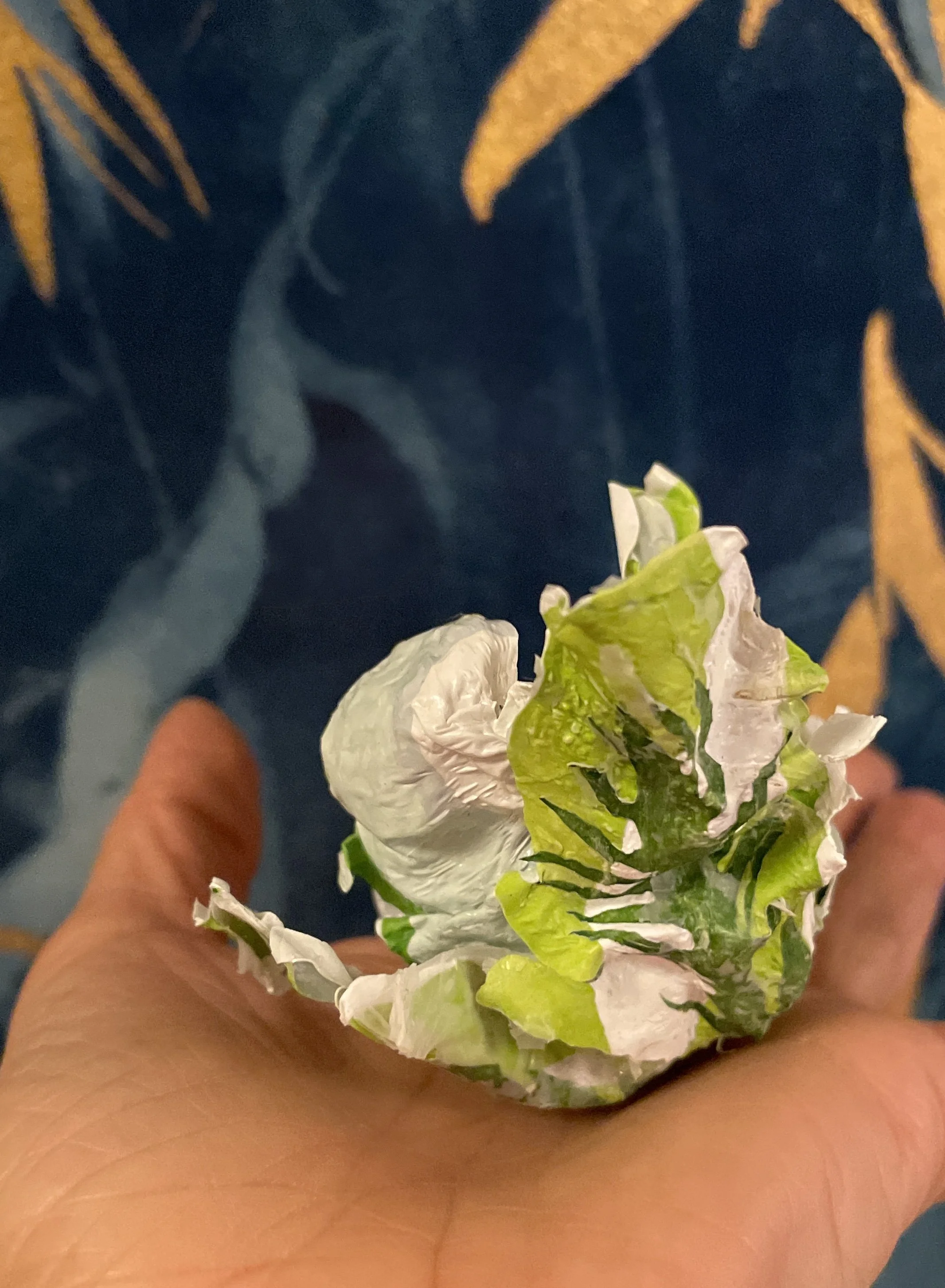
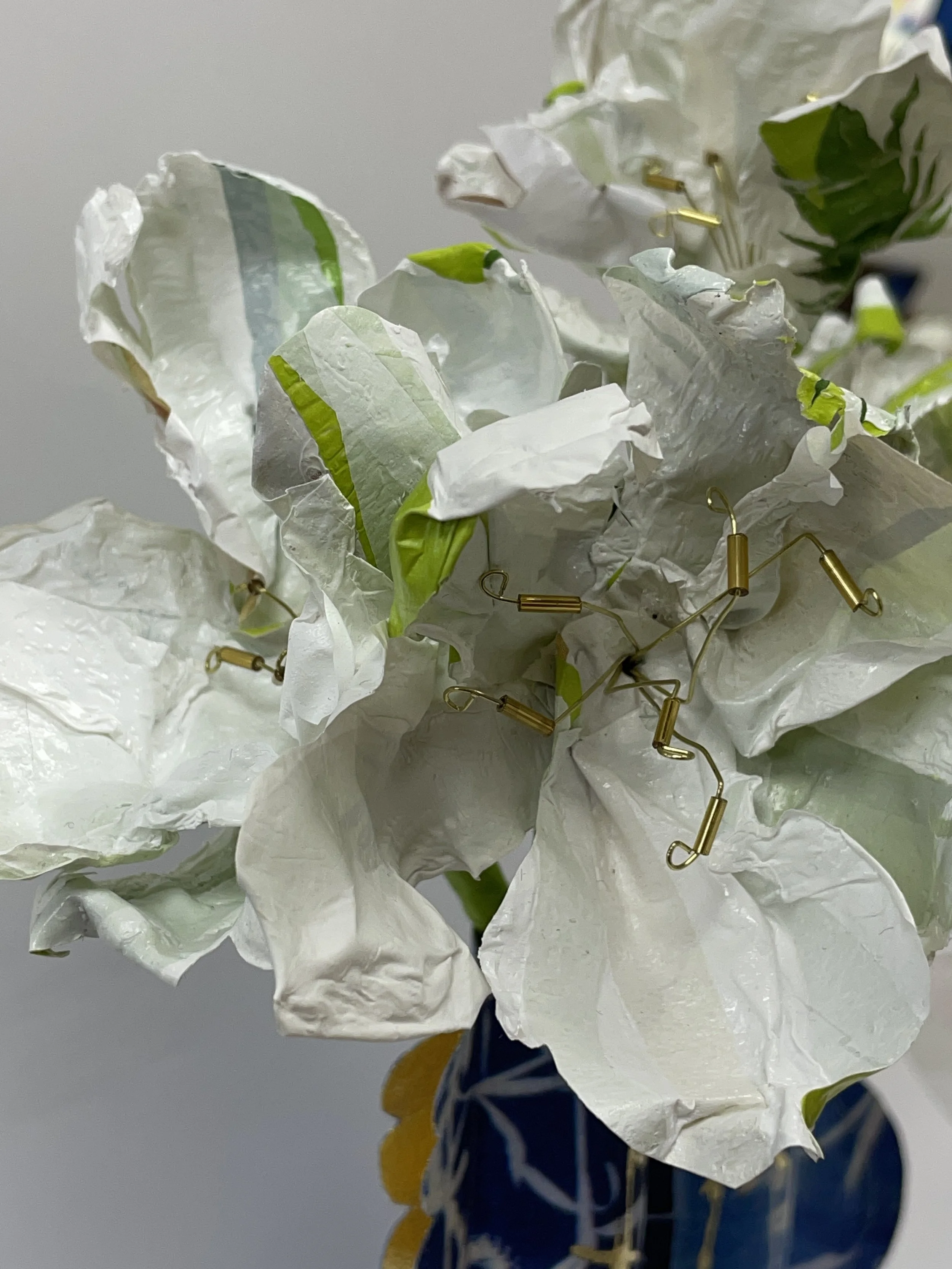
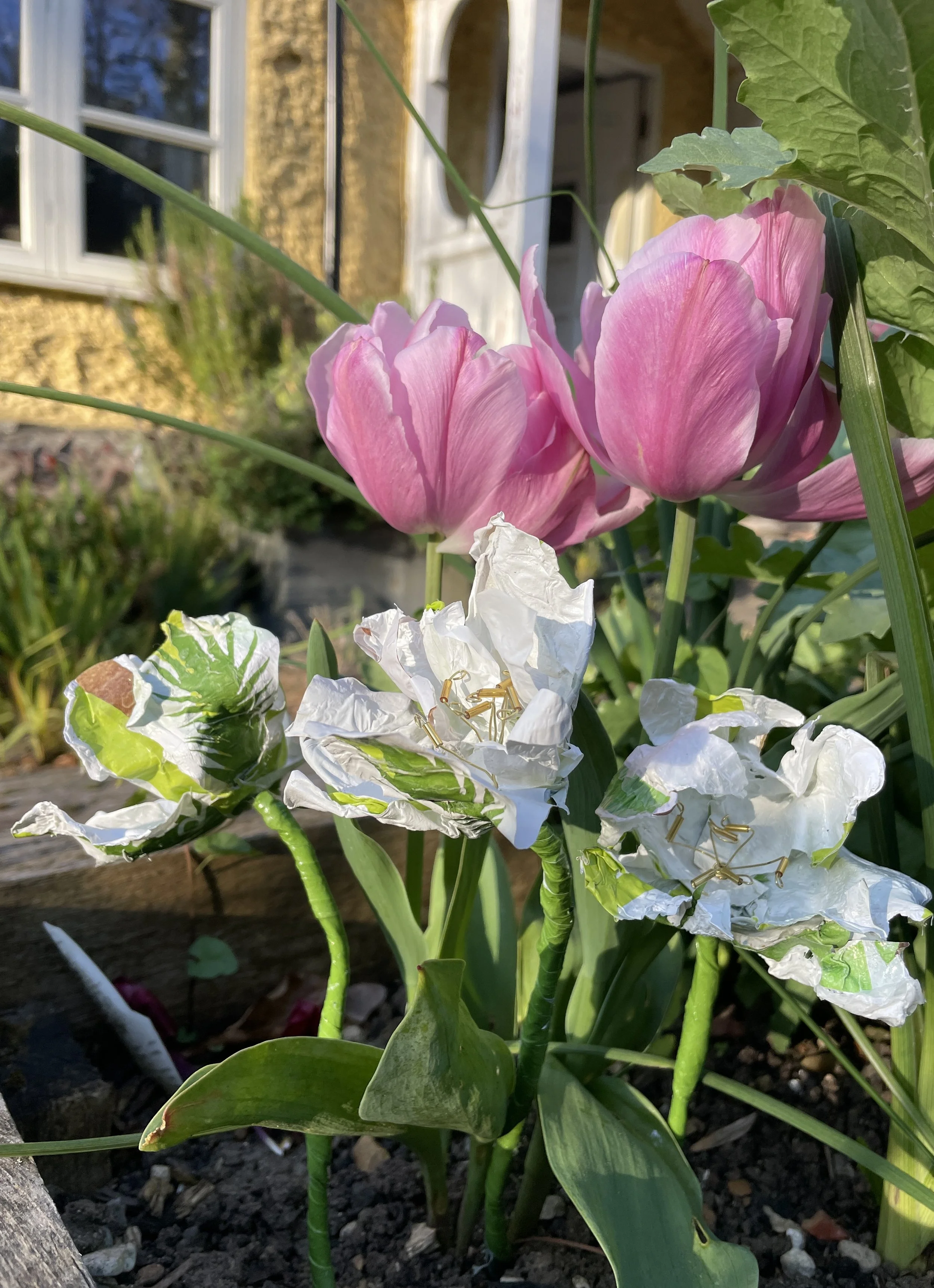
When I had decided I was making vases for the Museum of Small things I obviously had to work out what to put in them - my first thought was to create some plastic bag tulips, for last year’s installation I made giant ones out of old V&A carrier bags, this year they needed to be smaller than life size and complement the vases so I hoarded blue and white plastic bags, even cut the blue lettering out of Tesco bags, cause let’s face it, plastic bags are difficult to acquire these days! Best laid plans often change in a creative project as new possibilities present themselves and that is what happened during a visit to Houghton Hall. My sketching partner-in-crime and landscape painter Lydia Darrah and I visited the Tulip festival for some inspiration and the Peter Nyssen Super Parrot did the job - what a bloom! That was enough to prompt a rethink; out came the Waitrose bags, and the recycled plastic ‘Super Parrots’ followed. Couldn't resist ‘planting’ them in with my real life tulips, just for fun!
Exhibiting something you have created in a world famous museum is a once in a lifetime opportunity and I have had the privilege now to do it twice. I can't express how grateful I am to Kevin Freeman, Director of Fashion and Textiles at Norwich University of the Arts for championing students in such a generous way, creating incredible opportunities for us and for having faith in us to come up with the goods! I was also delighted to be offered and employed in the role of Co-Curator on the project.